
Boat, goat, coat, road: once a child can hear the long “o” gliding through those words, they are ready for the oa sound jolly phonics groups as its third sound, right between j and ie in Group 4.
Most children reach this one around four and a half to five, after the first two Group 4 sounds feel comfortable. This guide gives you the two everyday spellings, honest word lists, the official action, four short activities, and a free worksheet.
Two Ways to Spell /oa/: oa and ow
In the middle of a word, this sound is almost always written oa: boat, goat, coat, road. At the end of a word, it switches to ow: snow, grow, slow. Later on children also meet the split digraph o-e (bone, home) and a bare o on its own (go, no), but those come after oa and ow are secure.
The two spellings that trip children up are short “o” (cot vs. coat, got vs. goat) and the letters “ow” said the other way, as in cow rather than snow. Reading the word in context almost always settles which one it is.
A Short /oa/ Sound Story

Joan buttoned her coat and walked her cat down to the old pier. Near a small boat tied at the dock, she heard a thin, sad cry. Peering inside, she found a shivering little goat curled against a coil of rope. “Oh, you poor thing,” she said, wrapping it in her scarf, and the goat and the cat rode home together in her arms, warm at last.
Saying /oa/ and the Jolly Phonics Action
To make this sound, round your lips and close them a little more as the sound finishes, keeping your voice on the whole way through; it is a long, gliding “o”, not a short, flat one.
The official action is to bring a hand over your mouth as if you have done something wrong, saying “oh!” Many parents pair that with a quick chant: hand over mouth, “oh! oh! I forgot my coat,” pointing to a picture of a coat or a boat as they say it.
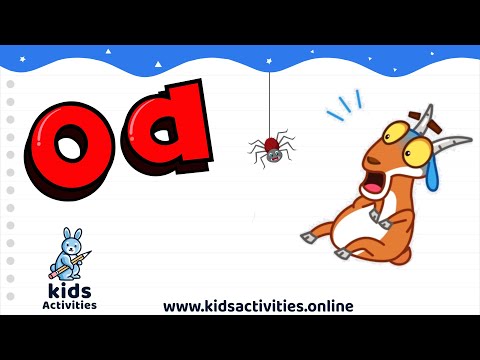
Watch a short pronunciation video:
For a broader walkthrough of the whole program, see our guide on how to teach Jolly Phonics step by step.
Real Words to Read and Blend
- Beginning: “oa” does not open English words, but the same long-o glide does, spelled with a plain “o”: open, over, only, oval, ocean, omit.
- Middle (oa): boat, goat, coat, road, soap, toast, coast, float, throat, roast.
- End (ow): snow, grow, slow, know, show, blow, glow, row.
CVC-style blending: b-oa-t → boat; g-oa-t → goat; c-oa-t → coat; r-oa-d → road; s-n-ow → snow; g-r-ow → grow.
Watch-out words: broad keeps the oa spelling but says a short “aw”, not the long glide; cupboard hides the same letters but the whole word is said “cub-erd,” nothing like boat.
Worksheet, Flashcards and a Blending Game
Print the /oa/ tracing worksheet below:

Show your child the gif below and have them trace the digraph in the air before picking up a pencil:

For blending, use our phase 2 and phase 3 flashcards below; the first level is recognizing which cards make the /oa/ sound, the advanced level is building the word without help.


Arranged correctly, those three cards spell “coat.” You can download the full phase 3 word list too:
For a written dictation game, write out a small table of graphemes your child knows, say “boat” out loud, and let them build the word from the table using listening alone.
Try These Four Activities
- Sound hunt (3 minutes): look around the house for anything to do with a coat, a road, or snow, saying each word slowly.
- Sort the spellings (4 minutes): label two cards “oa” and “ow”; call out boat, snow, goat, grow, road, slow and have your child point to the right card.
- Flashcard blending (5 minutes): use the cards above to build coat, goat, and boat, swapping the first letter each time.
- Quick dictation (2 minutes): say boat, coat, snow, and grow one at a time for your child to write, then check together.
From /j/ to /oa/ to /ee/: Where This Sound Sits
/oa/ follows the /j/ sound and comes before the /ee/ sound. See the full roadmap in the Jolly Phonics complete guide.
Frequently asked questions
What is the oa sound in Jolly Phonics?
It is the third sound in Group 4, a long gliding o made when the letters o and a work together, as heard in boat, goat, and coat.
How do you say the /oa/ sound correctly?
Round your lips and close them slightly more as the sound finishes, keeping your voice on throughout so it glides rather than stopping short.
What is the difference between oa and ow?
They make the same long o sound, but oa is used in the middle of a word such as boat or road, while ow is used at the end of a word such as snow or grow.
What age do children usually learn the oa sound?
Most children are ready around four and a half to five years old, once the first two Group 4 sounds, ai and j, feel secure.


